Friday, 18 April 2014

Still Room for Discussion in Russia?

      Russia, Ukraine, and the West have reportedly reached a small compromise concerning the Ukraine Crisis. The Kremlin was offered a new role in determining the fate of Russia’s neighbor states. 


      Talks were held in Geneva involving Ukraine, Russia, the United States, and the European Union. The issue of ending the occupation of eastern cities by pro-Russian sympathisers was brought up, and there will be a monitoring mission put in place and to be held up by the Organisation of Security and Co-operation in Europe. This organisation would also shepherd the transfer of government buildings that are currently being occupied by protesters in exchange for an amnesty for all, under the condition that they are not facing any capital crimes. 

      Consequently, Ukraine’s interim government agreed to accept future discussion on a far-reaching constitutional reform that would entail the Russian-speaking east comprehensive autonomy that is stipulated within the Kremlin.

      It wasn’t discussed though how the pro-Russian protest movement would be persuaded to vacate the buildings they are currently occupying, nor was it detailing how the anti-Russian militia groups who are currently installed in western-Ukraine to disband.


      These details aside, the more urgent matter is whether Putin would follow through with the terms of a possible more extensive agreement. Barack Obama warned that the US was prepared to intensify sanctions if Russia failed to stand by terms of said agreement. Obama says he hopes to see follow-through from Russia, but that he is very sceptical. 

      It remains to be seen if there will be any real advocacy given by the political leaders regarding these efforts. Despite the scepticism of the US president and despite the glaring flaws of the current arrangement, it is still a step in the right direction.

Original Source:
http://www.telegraph.co.uk/news/worldnews/europe/ukraine/10774084/Russia-and-West-reach-surprise-deal-on-Ukraine-crisis.html

Wednesday, 16 April 2014

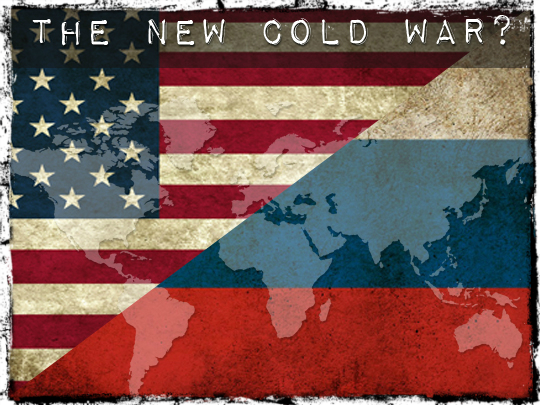
The New Cold War?


The growing tension in Eastern Ukraine and Russia has brought up many questions; one of them being if this is the beginning to the next Cold War. 

There has always been basic ideological divides between the Eastern and Western worlds, but Russia and the United States are at the peak of the divide. Since the before the Sochi Olympics and the human rights issues began to re-surface, the United States have been down Russia’s throats. Despite having the superpower of the world watching and criticising its every move, Russia hasn’t budged in the least. In fact, Russia continues to aggravate the states, unintentionally or not.

http://www.writingservicescompany.com/writing/wp-content/uploads/2013/03/.jpg
Up until this point, the relations between the two superpowers have been peaceful, but tense to say the least. Economic and political measures have been taken by both sides, but for the time being at least, military conflict hasn’t occurred.

Despite the lack of military action to this point, clear links can be made between the present conflict and the post World War Two Cold War. The remnants of the Cold War are apparent, and the two States are still in ideological competition, and are still very much part of a geopolitical rivalry. Both states seek dominance, which cannot be achieved simultaneously. 


The similarity can be seen between what I will refer to as the current Cold War and the first Cold War; during the first Cold War, the US and Russia engaged in proxy warfare, using other states as battlegrounds for their war. Post World War Two, these states were Cuba for Russia and Turkey for the US. Now, the United States have used Ukraine as their platform to become involved in the East, and they have involved numerous other countries such as Canada and most of Europe to follow alongside them. Russia has gotten some support from other countries in the East such as China, but has yet to find themselves a loyal ally. 

Both sides have abandoned the possibility for a cooperative relationship, at this point the best we can hope for is a mutual agreement to disagree.


Original Sources: